Ma the bumbler
A former heart-throb loses his shine
[ Original Link ]
Nov 17th 2012 | TAIPEI | from the print edition
WHEN he was first elected in 2008, Taiwan’s president, Ma Ying-jeou, offered Taiwanese high hopes that the island’s economy would open a new chapter. He promised ground-breaking agreements with China to help end Taiwan’s growing economic marginalisation. At the time, Mr Ma’s image was of a clean technocrat able to rise above the cronyism and infighting of his party, the Kuomintang (KMT). He was a welcome contrast to his fiery and pro-independence predecessor, Chen Shui-bian, now in jail for corruption.
Five years on, and despite being handily re-elected ten months ago, much has changed. In particular, popular satisfaction with Mr Ma has plummeted, to a record low of 13%, according to the TVBS Poll Centre. The country appears to agree on one thing: Mr Ma is an ineffectual bumbler.
Ordinary people do not find their livelihoods improving. Salaries have stagnated for a decade. The most visible impact of more open ties with China, which include a free-trade agreement, has been property speculation in anticipation of a flood of mainland money. Housing in former working-class areas on the edge of Taipei, the capital, now costs up to 40 times the average annual wage of $15,400. The number of families below the poverty line has leapt. Labour activists have taken to pelting the presidential office with eggs.
Exports account for 70% of GDP. So some of Taiwan’s problems are down to the dismal state of rich-world economies. Yet Mr Ma’s leadership is also to blame. He has failed to paint a more hopeful future, with sometimes hard measures needed now. Worse, he frequently tweaks policies in response to opposition or media criticism. It suggests indecisiveness.
Public anger first arose in June, when Mr Ma raised the price of government-subsidised electricity. Few Taiwanese understood why, even though Taiwan’s state-owned power company loses billions. In the face of public outrage, Mr Ma postponed a second round of electricity price rises scheduled for December. They will now take place later next year.
People are also worried that a national pension scheme is on course for bankruptcy in less than two decades. Yet Mr Ma cannot bring himself to raise premiums sharply, because of the temporary unpopularity it risks. When Mr Ma does try to appeal to Taiwanese who make up the island’s broad political centre, it often backfires with his party’s core supporters. Following public grumbles that retired civil servants, teachers and ex-servicemen were a privileged group, the cabinet announced plans to cut more than $300m in year-end bonuses, affecting around 381,000. The trouble was, veterans are among the KMT’s most fervent backers. Now some threaten to take to the streets in protest and deprive the KMT of their votes until the plan is scrapped. Meanwhile, Mr Ma’s clean image has been sullied by the indictment of the cabinet secretary-general for graft.
Cracks are starting to grow in the KMT façade. Recently Sean Lien, a prominent politician, criticised Mr Ma’s economic policies, saying that any politician in office during this time of sluggish growth was at best a “master of a beggar clan”—implying a country of paupers.
But the next election is four years away, and presidential hopefuls will not try to oust or even outshine Mr Ma anytime soon. After all, they will not want to take responsibility for the country’s economic problems. Nothing suggests Mr Ma’s main policies will change (or that they should), but his credibility is draining by the day.
Showing posts with label Taiwan. Show all posts
Showing posts with label Taiwan. Show all posts
Saturday, November 17, 2012
The Economist: Ma the bumbler
因為要一起承受, 完全沒有喜悅的感覺!

Tuesday, July 24, 2012
只有感動三天, 夠了嗎?
這就是中國, 連民間活動都要施壓!
:(
:(
 |
| From News |
中華民國國旗 飄揚倫敦市中心
(中央社記者黃貞貞倫敦 21 日專電)
迎接奧運,倫敦市中心知名的購物街─攝政街首次懸掛參賽國家國旗,中華民國國旗首度高掛在人潮眾多的市中心,十分醒目,旅英僑胞與留學生見到國旗內心都十分感動。
攝政街(Regent Street)是歐洲第1個規劃興建的購物街,由著名建築師奈許(John Nash)設計,1825年完工,它從牛津街(Oxford Street)一直延伸到比卡迪里圓環(Piccadilly Circus)。
包括英國最著名的玩具店漢姆利(Hamleys)、時尚名店Austin Reed、Jaeger、知名鞋店Church's等名牌都位在攝政街,經典名牌Burberry也計劃9月在這裡開設全球最大旗艦店,攝政街早已成為觀光客到倫敦旅遊購物必訪之地,每年吸引至少750萬人,奧運帶來的人潮預計可以衝破1000萬人。
由攝政街上數百家商店組成的「攝政街協會」(Regent Street Association)主席華克(Annie Walker)表示,攝政街藉由懸掛參與奧運國家的國旗,表達全力支持英國主辦奧運會,向來訪的各國旅客表達歡迎之意,呈現攝政街富有歷史的偉大建築之美。
攝政街協會發言人告訴中央社記者,這次共懸掛206面參與倫敦奧運國家的國旗,是史上第1次,同時攝政街也是倫敦唯一懸掛奧運參與國國旗的街道,一直延續到比卡迪里圓環以下,包含傑米街(Jermyn Street)和康迪街(Conduit Street)。
懸掛奧運參與國國旗的構想,由攝政街協會自行決定,倫敦奧委會並沒有參與。
發言人說,參賽國國旗主要依國名英文字母排序,從6月15日起陸續掛旗,每面國旗寬1.8公尺,長3.6公尺,將一直懸掛到9月初帕運(Paralympic Games)閉幕後。
中華民國國旗與瑞士、敘利亞、塔吉克(Tajikistan)、坦尚尼亞(Tanzania)及泰國並列同排,安排在攝政街底近比卡迪里圓環,是唯一6面掛在這個交通繁忙地段的國旗,十分搶眼。
許多旅居英國的台灣僑胞及留學生看到國旗首次高掛在倫敦市中心,都興奮不已,爭相在網路貼放照片,也有很多人親自到現場搶拍,為歷史性的一刻留下珍貴的畫面。
攝政街協會發言人說,自懸掛國旗後,很多外國旅客到攝政街都會尋找自己國家的國旗,拍照留念,很高興這個計劃也受到台灣民眾歡迎,希望大家在奧運期間都能盡情享受倫敦誠摯的歡迎之意,及各項令人期待的世界級體育賽事。
 |
| From News |
倫敦鬧區 中華民國國旗被移除
中央社 2012/07/24 22:46pm
(中央社記者黃貞貞倫敦24日專電)
為慶祝倫敦奧運高掛在倫敦市中心的中華民國國旗,在出現3天之後,於今天上午被移除。
攝政街是倫敦最著名的購物區之一。當地數百家商店組成的「攝政街協會」(Regent Street Association)為迎接27日揭幕的奧運,在攝政街上懸掛共206面參賽國家的國旗。
依字母排序,中華民國青天白日滿地紅國旗掛在攝政街南端靠近比卡迪里圓環(Piccadilly Circus)的路段。
從20日晚間開始,中華民國國旗高掛在這個每年至少有750萬人造訪的鬧區,許多旅英僑胞、台灣留學生及旅客到這裡和國旗拍照留念。
攝政街協會發言人日前告訴中央社記者,掛旗是協會的決定,倫敦奧運籌備委員會沒有參與。但不知何故,中華民國國旗在今天上午遭到移除。
記者詢問為何移除中華民國國旗,發言人說,所有問題必須詢問倫敦奧運籌委會某位官員。但記者致電這位官員時,她說完全不清楚此事。
疑遭施壓 英商店街國旗已取下
(中央社記者曾依璇台北24日電)
外交人士今天說,掛在英國倫敦商店街的中華民國國旗被取下,應是受到壓力,但這是商店街的活動,並非官方。
倫敦市中心的知名商圈「攝政街」為迎接奧運,首度在街上懸掛各國國旗,表示支持奧運,並歡迎各國旅客。中華民國國旗與瑞士、敘利亞、塔吉克、坦尚尼亞及泰國國旗並列。
不少台灣留學生或觀光客在攝政街以國旗為背景拍照留念,但今天開始有青天白日滿地紅旗缺席的照片在社群網站「臉書」上流傳。
外交人士受訪時說,懸掛國旗是商店街配合倫敦奧運而發起的活動,並非官方活動;據他瞭解,應是受到某方「施壓」後才取下。
Saturday, February 18, 2012
Jeremy Lin
2012 年 2 月空中英語教室的封面是 Jeremy Lin, 課程的內容從 2/6-8 分成三天, 標題是 Jeremy Lin: Chasing dreams and finding joy.
 |
| From News |
非常神奇地, 我在台灣時間 2/6 看到 Youtube 的這則影片, 並分享到 facebook 中,
然後, Jeremy Lin 就此展開 7 連勝傳奇, 並創下許多驚人的紀錄。其中, 最經典的是美國時間 2/14 情人節當天, 對多倫多暴龍一役, 最後致勝的三分球,
沒錯, 紐約尼克隊全場就只有領先最後的 0.5 秒, 卻贏得勝利!
空中英語教室的課程內容是用 Chinese-American 來形容 Jeremy Lin,
Among professional basketball players, Jeremy Lin's background is not typical. He graduated from Harvard University, which sends few players to the NBA, and is the only Chinese-American NBA player. But when you watch him on the court, there is no doubt that he belongs there.
不過在 2010 的美國人口普查中, 下面這個影片是宣導台裔美國人不要再填 Chinese 了, 鼓勵來自台灣的美國人, 勾選 Other-Asian, 然後填寫 Taiwanese, 用以和 Chinese 區別。
 |
| From News |
相關新聞閱讀: Ecstatic Taiwanese claim Knicks' Lin as their own
Ecstatic Taiwanese claim Knicks' Lin as their own
By ANNIE HUANG | Associated Press – Thu, Feb 16, 2012
TAIPEI, Taiwan (AP) — With only a handful of foreign embassies, and a political leadership forced into international invisibility, it's not surprising that the 23 million people of Taiwan feel their island home doesn't always get the respect it deserves.
Perhaps that's why they're now embracing emerging New York Knicks star Jeremy Lin as one of their own, reveling in his basketball exploits with a passion rare for a place better known for its flat screen TVs and computer chips.
Lin was born and raised in the United States, and his maternal grandmother comes from China, but his parents spent their formative years in Taiwan, and that's enough for people here to see him as a true-blue son of the island.
The Harvard graduate's remarkably rapid rise from NBA obscurity to stardom appeals to the Taiwanese as embodying the virtues they say propelled their island from agricultural backwater to high-tech powerhouse: hard work, devotion to family and modesty.
"Jeremy Lin may not consider himself a Taiwanese, and his success has had nothing to do with Taiwan, but Taiwanese regard him as one of their own," said political scientist Liu Bi-rong of Taipei's Soochow University. "Now he has taken the world by storm, and they are proud and enthralled by what he has done."
Across the 100-mile Taiwan Strait, China too is claiming Lin as a native son, pointing to his grandmother's roots in the eastern coastal province of Zhejiang as proof of his Chinese-ness.
He is being touted as the next big Chinese sports star after Houston Rockets center Yao Ming, whose retirement last year has tested the NBA's deep-seated popularity on the mainland.
China's pride of ownership is all too familiar to most Taiwanese, who are constantly bombarded by Beijing's assertions that they live in a political never-never land, lacking all the elementary accouterments of statehood.
The two sides split amid civil war in 1949, and China claims the democratic island as its own, to be brought back into the fold by persuasion if possible, by force if necessary.
Watching Lin's latest performance against the Sacramento Kings at a Taipei sports bar Thursday morning, 22-year-old saleswoman Tsai Shu-fan dismissed China's Lin identification with a barely disguised sneer.
"He is a native of Changhua, where his parents came from," she said. "He is not a Chinese."
Adjusting to China's domineering posture has become something of a cottage industry on Taiwan, particularly since it lost its seat in the United Nations to Beijing in 1971, and virtually all of its diplomatic allies — including the United States — abandoned it for China 30 or 40 years ago.
Its political leaders now have nowhere to travel on official international visits, except to countries like Paraguay and Burkina Faso, two of the 23 nations around the world that still recognize it.
That kind of isolation has helped engender outsized reactions when local people make it big on the world stage. Director Ang Lee became a favorite son for the wall-to-wall acclaim he received when "Crouching Tiger, Hidden Dragon" and "Brokeback Mountain" hit the silver screen. Former New York Yankees and current Washington Nationals pitcher Chien-ming Wang was commonly referred to on local television broadcasts as "Taiwan's Glory," and Yani Tseng, the No. 1 golfer on the LPGA Tour for the past year, has given her sport a huge boost on the island.
But only a month into helping transform the New York Knicks from underachieving losers into the NBA's hottest team, Lin looks set to leave the other Taiwanese icons trailing in the dust.
His Knicks games are broadcast not only on sports stations, but also on news channels, which devote talk shows to his exploits once the games are over.
Newspapers have totally forgotten about last month's presidential elections, apparently mindful that filling their pages with Linsanity is a far better bet for attracting readers.
And a English tutoring school is airing TV ads to teach viewers newly coined words like "Lincredible" and "Linternational," noting Lin's cascading global impact.
None of that surprises Tsai, the young saleswoman, who came to the sports bar Thursday wearing a dark blue hat emblazoned with the Chinese character for her new hero's name.
"Lin is the young Michael Jordan, and he has Taiwanese blood," she said. "I am so proud of him."
Saturday, January 21, 2012
交大台灣研究社 尋人啟事
22年前, 野百合學運後, 在交大所成立的本土社團: 台灣研究社, 在 facebook 復社了,
如果你曾經是交大台研社的一員, 想要再與夥伴相聚, 請 email 給我,
yeuankuenlee@gmail.com
或是在 facebook 加我好友, 期待與你相見。
如果你曾經是交大台研社的一員, 想要再與夥伴相聚, 請 email 給我,
yeuankuenlee@gmail.com
或是在 facebook 加我好友, 期待與你相見。
 |
| From Life |
Friday, July 23, 2010
The Economist: Corruption in Taiwan

The Economist: Corruption in Taiwan
Confirming the worst suspicions
The arrest of three senior judges sparks renewed debate over corruption
Jul 22nd 2010 | TAIPEI

RUMOURS of corruption among the judiciary have long flourished in Taiwan. Yet the news on July 14th that three high-court judges and a prosecutor
 had been detained amid allegations that they took bribes to fix the outcome of a high-profile case, has brought public outrage to boiling point. On July 18th Taiwan’s highest-level judicial official, Lai In-jaw, who is in charge of the island’s supreme and lower courts chose to resign because of the outcry over the case. The government is hastily promising reforms.
The case is Taiwan’s biggest judicial-corruption scandal in over a decade. It involves Ho Chih-hui, an ex-lawmaker with the ruling Kuomintang (now expelled from the party), who was convicted in 2006 by a lower court for taking kickbacks over the building of a science park. He was given a 19-year sentence. Following that, according to Taipei District Court documents, contacts of Mr Ho tried to bribe judges sitting in a higher court, in an attempt to buy his freedom. In May this year the judges did hand down a not-guilty verdict to Mr Ho, but on July 13th members of an anti-corruption task force stormed the homes and offices of the judges and prosecutor involved. The judicial officials could now each face a spell of ten years behind bars, if found guilty. Mr Ho is on the run.
For jaded Taiwanese observers the latest developments merely confirm long-held suspicions of graft in their insular and inscrutable judiciary. “The significance of this case is that it makes all the rumours a reality,” said Yang Tai-shuenn, a politics professor at Taipei’s Chinese Culture University. “It will push the government to do something.”
The country’s president, Ma Ying-jeou, promptly decided that he needed to be seen to act. On July 20th he announced the formation of a new commission to battle corruption and vote-buying. Its 200 staff will enjoy police powers of search and arrest. “I am determined, absolutely determined, to create a clean government,” Mr Ma said. “Every public servant must understand that ethical principles cannot be violated or trampled on. I will not stand for a minority of corrupt officials destroying the image of government.”
Such talk is welcome, but the commission has a hard task ahead. Some are optimistically drawing comparisons to Singapore’s Corrupt Practices Investigation Bureau and Hong Kong’s Independent Commission Against Corruption. But, unlike those bodies, the Taiwanese commission will not report directly to the president, but only to the justice ministry, where tangled bureaucracy and civil servants who are deferential to their political bosses could limit action.
In any case, complains the opposition Democratic Progressive Party (DPP), and various experts, such a commission will be toothless as long as it is nearly impossible to sack bad judges and prosecutors. An act calling for such a mechanism has long been stalled in parliament.
Yet Mr Ma has good reasons to tackle the issue. He signed a partial free-trade agreement with China at the end of June, and is keen to attract more foreign investment. That will be harder if Taiwan is seen as soft on corruption. As important, voters are increasingly fed up with graft. Mr Ma was swept to office in 2008 after promising to make clean government his priority. Ahead of municipal elections at the end of this year, and then presidential ones in 2012, he needs to reassure the public that he is still serious about it.
Yet he has one big advantage over the opposition. The DPP is still struggling to distance itself from its imprisoned former president, Chen Shui-bian, who last year received a life sentence (since reduced to 20 years) for corruption.
Sunday, May 30, 2010
回歸歷史的原貌就好!
大家要多讀歷史, 了解歷史, 接受歷史!
[李筱峰專欄] 流亡政權與台灣地位
(自由電子報 2010/05/30 自由廣場言論 轉貼原址)
民進黨主席蔡英文一句「中華民國是流亡政府」,引來藍營和統媒一陣鬼哭狼嚎。然則,蔡英文說錯了嗎?
請回到六十一年前的歷史場景:一九四九年一月十九日,正當南京的國民黨政權面臨共產革命而搖搖欲墜之際,盟軍統帥麥克阿瑟表示:「台灣現在還不是中國正式的領土,因此南京垮台後,中共不能進入台灣,美國將協助台灣人獨立,並將提交聯合國決定。」(見1.19香港大公報東京航訊)。同時美國也警告國民黨,「盟軍總部對台灣仍有任務,故南京可遷都廣州,不能遷台灣」(1.19.路透社南京電)。
就在這一年,國民黨的中華民國政府開始敗走,果然先退到廣州,繼而北走重慶,最後才不得已於十二月逃入台灣。
 台灣原本不屬中華民國,不信可看中華民國憲法前身《五五憲草》(1936.5.5)所列的中華民國「固有疆域」,並不包括台灣。終戰後的台灣,只是由國府軍隊代表盟軍進行的暫時軍事接管地,而非中華民國正式領土。這個事實,可以從一九四五年十月廿五日在中山堂的受降典禮台上掛出的中、美、英、蘇四國國旗及四國領袖肖像看出(表示不是中華民國單獨受降)。台灣的地位有待盟國與日本簽訂和約決定領土的轉承才能確定。無怪乎,蔣介石在一九四九年初會給陳誠如此批示:「台灣在對日和約未成立前,不過是我國一託管地帶性質」(一月十二日、十三日陳誠日記)。
偏偏對日和約來不及簽訂而中華民國卻在大陸上結束!國民黨政權頂著「中華民國」的名號,敗逃到地位尚未確定的台灣。美國原擬放棄這個腐敗的政權,卻因翌年韓戰爆發(1950.6.25),而重新考慮支持退到台灣的國民黨政權以對抗共產世界。為了防止中共入主台灣,杜魯門總統重申台灣地位未定的主張─「台灣將來的地位,必須等待太平洋安全恢復、對日和約的締結、或聯合國的考慮」。
對日和約終於在一九五一年於舊金山簽訂,翌年又簽台北和約。後者是彌補前者(沒有中華民國代表參加)之不足。但兩約皆只要求日本放棄台澎,而不言明台澎領土的歸屬。無怪乎一九五四年美蔣簽訂共同防禦條約之前,美國總統艾森豪與國務卿杜勒斯又重申:「台澎的法律地位絕非中國的一部分」、「作為對日本的主要戰勝國,美國對於日本以前佔領的這些島嶼(指台澎)應擁有發言權。」
確定台灣不屬中國之後,一九四九年底中華民國政府敗退來台就是如假包換的「流亡」(而非「遷都」)。這次的流亡,可以用蔣介石的話來說明:「我們的中華民國到去年終就隨大陸淪陷而已滅亡了,我們今天都已成了亡國之民」(1950.3.13 <復職的使命與目的>演講詞),既然已經亡國,離開其已經滅亡的國土,不是流亡是什麼?
國民黨政權於一九四九年底流亡到台灣,是舉世皆知的常識。世界上所有敘述這個事實的英語著作,如果不是用exile就是用escape來形容。這不是流亡、逃亡之意嗎?試看最具權威的大英百科全書(Britannica encyclopedia)如何介紹蔣介石,原文如下:「soldier and statesman, head of the Nationalist government in China from 1928 to 1949, and subsequently head of the Chinese Nationalist government in exile on Taiwan」後面一句講得夠明白,蔣介石是「流亡在台灣之中華民國的領袖」。
流亡來台沒有關係,如何落地生根本土化才重要。若一味否認歷史常識,不僅無知,而且無恥!
(作者李筱峰現任國立台北教育大學台灣文化研究所教授 http://www.jimlee.org.tw)

中華民國流亡台灣 60 年暨戰後台灣國際處境
作者: 台灣教授協會 / 編著
出版社: 前衛
出版日期: 2010 年 04 月 01 日
ISBN:9789578016415
[李筱峰專欄] 流亡政權與台灣地位
(自由電子報 2010/05/30 自由廣場言論 轉貼原址)
民進黨主席蔡英文一句「中華民國是流亡政府」,引來藍營和統媒一陣鬼哭狼嚎。然則,蔡英文說錯了嗎?
請回到六十一年前的歷史場景:一九四九年一月十九日,正當南京的國民黨政權面臨共產革命而搖搖欲墜之際,盟軍統帥麥克阿瑟表示:「台灣現在還不是中國正式的領土,因此南京垮台後,中共不能進入台灣,美國將協助台灣人獨立,並將提交聯合國決定。」(見1.19香港大公報東京航訊)。同時美國也警告國民黨,「盟軍總部對台灣仍有任務,故南京可遷都廣州,不能遷台灣」(1.19.路透社南京電)。
就在這一年,國民黨的中華民國政府開始敗走,果然先退到廣州,繼而北走重慶,最後才不得已於十二月逃入台灣。
台灣原本不屬中華民國,不信可看中華民國憲法前身《五五憲草》(1936.5.5)所列的中華民國「固有疆域」,並不包括台灣。終戰後的台灣,只是由國府軍隊代表盟軍進行的暫時軍事接管地,而非中華民國正式領土。這個事實,可以從一九四五年十月廿五日在中山堂的受降典禮台上掛出的中、美、英、蘇四國國旗及四國領袖肖像看出(表示不是中華民國單獨受降)。台灣的地位有待盟國與日本簽訂和約決定領土的轉承才能確定。無怪乎,蔣介石在一九四九年初會給陳誠如此批示:「台灣在對日和約未成立前,不過是我國一託管地帶性質」(一月十二日、十三日陳誠日記)。偏偏對日和約來不及簽訂而中華民國卻在大陸上結束!國民黨政權頂著「中華民國」的名號,敗逃到地位尚未確定的台灣。美國原擬放棄這個腐敗的政權,卻因翌年韓戰爆發(1950.6.25),而重新考慮支持退到台灣的國民黨政權以對抗共產世界。為了防止中共入主台灣,杜魯門總統重申台灣地位未定的主張─「台灣將來的地位,必須等待太平洋安全恢復、對日和約的締結、或聯合國的考慮」。
對日和約終於在一九五一年於舊金山簽訂,翌年又簽台北和約。後者是彌補前者(沒有中華民國代表參加)之不足。但兩約皆只要求日本放棄台澎,而不言明台澎領土的歸屬。無怪乎一九五四年美蔣簽訂共同防禦條約之前,美國總統艾森豪與國務卿杜勒斯又重申:「台澎的法律地位絕非中國的一部分」、「作為對日本的主要戰勝國,美國對於日本以前佔領的這些島嶼(指台澎)應擁有發言權。」
確定台灣不屬中國之後,一九四九年底中華民國政府敗退來台就是如假包換的「流亡」(而非「遷都」)。這次的流亡,可以用蔣介石的話來說明:「我們的中華民國到去年終就隨大陸淪陷而已滅亡了,我們今天都已成了亡國之民」(1950.3.13 <復職的使命與目的>演講詞),既然已經亡國,離開其已經滅亡的國土,不是流亡是什麼?
國民黨政權於一九四九年底流亡到台灣,是舉世皆知的常識。世界上所有敘述這個事實的英語著作,如果不是用exile就是用escape來形容。這不是流亡、逃亡之意嗎?試看最具權威的大英百科全書(Britannica encyclopedia)如何介紹蔣介石,原文如下:「soldier and statesman, head of the Nationalist government in China from 1928 to 1949, and subsequently head of the Chinese Nationalist government in exile on Taiwan」後面一句講得夠明白,蔣介石是「流亡在台灣之中華民國的領袖」。
流亡來台沒有關係,如何落地生根本土化才重要。若一味否認歷史常識,不僅無知,而且無恥!
(作者李筱峰現任國立台北教育大學台灣文化研究所教授 http://www.jimlee.org.tw)
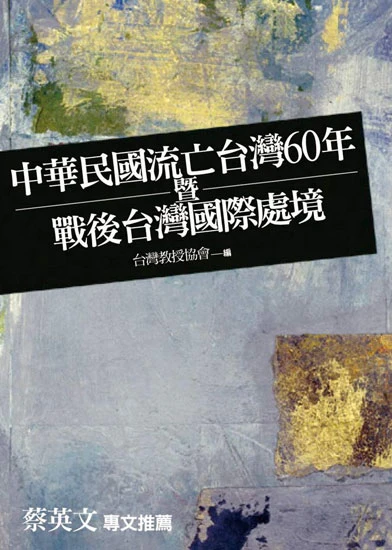
中華民國流亡台灣 60 年暨戰後台灣國際處境
作者: 台灣教授協會 / 編著
出版社: 前衛
出版日期: 2010 年 04 月 01 日
ISBN:9789578016415
Tuesday, February 16, 2010
台灣阿嬤 Phalaenopsi amabilis
去年過年買的台灣阿嬤(Phalaenopsi amabilis) 開始開花了 !

(10 Feb. 2010)

總共有10個花苞呢! (10 Feb. 2010)

ama 很漂亮吧! (10 Feb. 2010)

ama 特寫! (10 Feb. 2010)
(10 Feb. 2010)
總共有10個花苞呢! (10 Feb. 2010)
ama 很漂亮吧! (10 Feb. 2010)
ama 特寫! (10 Feb. 2010)
Tuesday, December 01, 2009
News: Taiwan and China

Taiwan and China
By PHILIP BOWRING
Published: October 6, 2009
HONG KONG - Taiwan’s position as a de facto independent state seems to be morphing very slowly toward the “one country, two systems” status of Hong Kong. The process is not irreversible but the sentiments of those of mainland origin in the governing Nationalist Party, along with the self-interest of business groups and a widespread sense of economic vulnerability are all pushing the island toward accommodation with Beijing.
The trend could mean an erosion in the support Taiwan gets, albeit erratically, from the United States and Japan.
The most striking evidence of a desire to please Beijing — at the expense of the liberal values which have gained Taiwan much praise in recent years — was the denial of entry to the exiled Uighur leader Rebiya Kadeer. This was done in the name of “national interest,” apparently linked to the finalization, expected soon, of a memorandum of understanding on cross-strait financial links.
For sure, the memorandum would be a major advance, enabling banks in particular to escape the confines of Taiwan, with its low growth and surplus savings, for the fast-growing mainland. And it would bring more mainland capital to local stocks and property. But the government of President Ma Ying-jeou may have forgotten that Taiwan’s national interest as an independent state, albeit one that may one day merge with the mainland, sometimes requires sacrifices. The degree of autonomy that Rebiya Kadeer has been seeking for Uighurs is a fraction of that enjoyed by Taiwan or even Hong Kong.
There is real benefit in increasing cross-straits financial links. Banks have much to gain by being able to service clients in Taiwan with business on the mainland. Cross-straits links may attract service industries to Taiwan that would otherwise go to Hong Kong. Mainland tourism is also an unqualified plus.
But Taiwan seems to be talking itself into believing that it is even more dependent on the mainland than need be the case. The island would be a more attractive place for foreign business if it removed the many restrictions that exist to protect local businesses, or stem simply from bureaucracy and outdated rules. Tax issues also tend to keep business offshore while not preventing a huge outflow of capital. The Ma government has made progress on these issues, but they get scant attention compared to cross-straits ones.
It is easy to blame a lackluster economy on being unable to take full advantage of the mainland. But in reality, Taiwan is a mature economy with minimal growth in its work force. Like Japan, its problems lie with an inefficient domestic services sector, not with an inventive export-manufacturing one.
Dependence on China is often overstated. While 40 percent of Taiwan’s exports go there, more than half are components for globally traded items like laptops and cellphones made by Taiwanese companies and then re-exported from China. The dependence is self-imposed for profit reasons, which may be shifting as mainland costs rise. There are alternatives.
Worrying too for friends of Taiwan’s liberal democracy is the vengeance being meted out to the opposition by powerful supporters of the governing Nationalist Party, or KMT. Former president Chen Shui-bian was found guilty of corruption and his conduct has left the opposition Democratic Progressive Party demoralized and frustrated. But given the pervasiveness of money politics and the past reputation of the Nationalists for corruption, the life sentence for Chen is extreme. Now, in the name of fighting corruption, there is talk of a witch-hunt against other members of the Chen administration. To some this smacks of an attempt by pro-unification elements to please Beijing by demonizing Chen, who supported independence and who suffered much in the cause of breaking the KMT’s authoritarian hold on power.
None of this is likely to help Taiwan’s relations with its main supporter, the United States. Chen upset a natural ally in George W. Bush by needlessly provoking Beijing in an attempt to score political points at home. Now the KMT seems to have gone to the other extreme. Taiwan has long disappointed Washington with unwillingness to spend money on arms. Now it may sense a lack of willingness to pay an economic price for the principles of independence and liberalism it claims to stand for. President Ma remains well-regarded abroad, but his grip on the KMT is uncertain. Taiwan lacks a strategic view of itself and how to balance relations with the Chinese mainland, the United States and the global economy with liberal democracy and de facto independence.
臺灣與中國大陸改善關係 是福是禍?
新紀元周刊 陳邁克 編譯
獨立作家包雲(Philip Bowring)十月七日在《紐約時報》發表〈臺灣與中國〉(Taiwan and China)一文。作者認為,馬英九政府為了經濟利益,對北京過度讓步,可能危及臺灣的民主自由。
馬英九對北京過度讓步
包雲表示,臺灣作為一個實際上獨立的國家,已經逐漸接近香港的一國兩制。國民黨的親共趨向、以私利為中心的商業團體、還有經濟上脆弱的普遍感覺,一起把臺灣推向迎合北京的道路上。
以國家利益為由拒絕維族領袖熱比婭入境,是臺灣取悅北京最明顯的證據,這顯然與兩岸即將簽訂的金融合作備忘錄有關。
即使合作備忘錄對臺灣有利,但馬英九政府可能忘記,臺灣作為事實上獨立的國家,有時候需要犧牲國家利益。熱比婭替維吾爾人爭取的自治權,可能只是臺灣甚至香港所擁有的一部分。
兩岸增加金融交流縱使具有實質利益,但臺灣相信自己需要依賴中國的程度,似乎超過事實。如果臺灣能鬆綁保護本地企業的限制,改變官僚制度和過時的法規、稅法,就能吸引更多外資。馬英九政府在這些方面不是沒改進,而是被兩岸議題淹沒。
前臺灣總統陳水扁試圖在臺灣獲取政治上的高分,因而激怒北京、困擾美國。現在,國民黨似乎走向另一個極端。臺灣對自身缺乏戰略眼光,來平衡其與中國大陸、美國,以及在自由民主和事實上獨立的條件下,與全球經濟的關係。
臺灣受制中共
全球安全網站(GlobalSecurity.org)在五月十一日發表的資深研究員史奈德(Scott A. Snyder)的文章〈臺灣逐漸惡化的戰略地位與兩岸關係〉(Taiwan's Deteriorating Strategic Position and Cross-Strait Relations),就已經表示,儘管兩岸關係改善、經濟合作增加,但在中共持續擴軍的情況下,臺灣的戰略地位卻日益惡化。臺灣同時需要美國持續供應武器以及在政治上的支持,才能保有必要的空間及政治力量,而不受制於中共。
馬英九上任一年以來,中臺雙方於四月份在南京召開第三次「江陳會」,會中簽訂三項協議以加強兩岸經濟合作。然而,兩岸恢復對話對臺灣逐漸惡化的長期戰略地位而言,並無多大幫助。臺灣的戰略地位之所以惡化,起因於中共在全球政治、經濟和軍事上擁有越來越大的影響力。
對於馬英九的政治成就,以及臺灣開展有效的國際經濟成長策略的能力而言,兩岸關係的未來發展扮演舉足輕重的角色。
兩岸相互依賴性增加
馬英九政府藉由推行「大三通」與中國大陸建立較多經濟上的相互依賴性,顯示出該政府較願意接受「與大陸建立較緊密的經濟關係對臺灣有顯著利益,但不表示在政治上有較緊密的整合」這樣的倡議。此外,他也希望,與大陸加強合作可以減少中共對臺灣擴展經貿外交的封殺,進而獲取較多的區域或全球性經濟契機。
馬英九倡議與胡錦濤背書的「兩岸經濟合作架構協議」(Economic Cooperation Framework Agreement,ECFA),可能增加彼此在經濟上的相互依賴性,也可能減少中共在政治上對臺灣與東南亞鄰國建立自由貿易協定的干預,否則,臺灣的競爭地位可能因此而蒙受損失。
然而,有些人認為,在經濟上與中國更加相互依賴,以獲取更多區域性經濟契機的策略,在某些方面構成危險。第一,民進黨認為,馬英九為了短期利益對北京做出讓步,這會削弱臺灣在政治上保持不受北京支配的長期能力。第二,這種策略會增加北京的影響力,因為此一策略的成功與否,取決於中共是否接受臺灣在維持某種程度的「國際空間」上擁有合法利益。第三,兩岸加強經濟整合會使北京更容易實行「一國兩制」,儘管大多數臺灣人反對這種制度。
臺灣戰略地位持續惡化
中共不斷擴充軍備也使臺灣的長期戰略地位持續惡化。儘管美國基於《臺灣關係法》,保證臺灣擁有自我防衛、不受中共攻擊或恫嚇的戰力。然而,中共持續進行軍事現代化,卻使兩岸軍事平衡逐漸向中共傾斜。
正當美中協商對於全球穩定性的管理越形重要之際,臺灣日益關注美國最終是否會屈服於中共壓力,而減少出售臺灣自衛所需的武器。臺灣不但需要美國持續供應武器,也需要美國在政治上的持久支持,以確保臺灣擁有必要的空間及政治力量,而不完全依賴中共。
Tuesday, August 18, 2009
News: Taiwan's president defends handling of typhoon
這是馬總統國際記者會後, 美聯社所寫的新聞稿, 標題就直接點出馬總統還在為自己的救援遲緩而辯解,...
網路上有一篇值得推薦的文章: 不要再把責任推給災民 (by 黃世澤)
網路上有一篇值得推薦的文章: 不要再把責任推給災民 (by 黃世澤)
Taiwan's president defends handling of typhoon
By DEBBY WU
Associated Press Writer
TAIPEI, Taiwan (AP) -- Taiwanese President Ma Ying-jeou defended his handling of Typhoon Morakot, saying Tuesday that he was still a strong leader despite the resignation of a senior official in the wake of criticism of the government response to the disaster.
The storm hit Taiwan 11 days ago, causing more than 400 deaths and property damage in excess of $2 billion. Friends and foes alike have blamed Ma for reacting too slowly in dealing with Morakot's aftermath, saying that his weak leadership - including an initial rejection of foreign aid - let down the people of the island.
But in comments Tuesday, Ma rejected those claims out of hand.
"I have exercised strong leadership throughout this process by ordering the armed forces to increase their participation in the disaster rescue operation," he said.
Ma said that he would likely accept the resignation of Vice Foreign Minister Andrew Hsia, who offered to step down late Monday to take responsibility for his agency's rejection of aid from other governments after Morakot hit.
The Foreign Ministry initially instructed Taiwanese missions abroad to reject offers of aid but reversed the decision five days after the storm hit.
Still the criticism is mounting. An editorial in Taiwan's normally pro-Ma China Times newspaper Tuesday said Morakot highlighted fundamental flaws in the president's role as a leader.
"(Ma) has been distant and arrogant, and he has only made (victims) more angry instead of comforting them," the newspaper said. "Second, he is not fast enough in his judgment ... he has not shown decisiveness required in a leader when facing a sudden disaster."
Some lawmakers from the ruling Nationalist Party echoed the China Times claim.
"Ma's problems are that he appointed unsuitable people to senior positions, and he failed to declare the disaster a national emergency, which prevented the military to be mobilized right away," said lawmaker Chiu Yi.
Colleague Lu Hsueh-chang said Ma's Cabinet appeared totally unprepared to cope with Morakot's fury.
"The Cabinet did not show any empathy and it was too careless," he said. "It was unforgivable that the Cabinet did not make any move during the first hours after the typhoon hit."
Meanwhile, a U.S. relief team backed by heavy-lift helicopters stepped up its efforts Tuesday to help local authorities get aid to the hundreds of people thought to be stranded in mountain villages.
Relying mainly on 70 Taiwanese choppers, local rescuers have already ferried more than 35,000 villagers to safety, many stranded in and around 44 hard-hit mountain communities, cut off from the outside world after roads and bridges were washed away by Morakot's fury.
Army spokesman Lt. Col. Tai Chan-te said more than 200 people were rescued Monday but could not give an estimate of how many still needed aid. Officials said late Sunday that at least 1,000 people were still stranded.
In addition to the damage it wrought on Taiwan, Morakot also caused 22 fatalities in the Philippines and eight in China.
That figure does not include the 22 seaman China's official Xinhua News Agency says disappeared when their ship sank off Taiwanese waters on Aug. 8. The seaman were employed by a shipping company in eastern China, Xinhua says.
CNN QuickVote: Should Taiwan's leader stand down over delays in aiding typhoon victims?
這是莫拉克風災過後, CNN 網站的一項網路意見調查, 大意是: 台灣領導人應該為這次救災延緩而下台嗎? (Should Taiwan's leader stand down over delays in aiding typhoon victims?)
我是從 噗浪 (Plurk) 看到這則消息的, 自己投完票, 也轉噗了這個消息, 畢竟一個世界性媒體做這樣的意見調查, 本身就是一件不尋常的事件, 8/12 紐約時報也有一則報導指出台灣總統成為風災後憤怒的目標(Taiwan President Is Target of Anger After Typhoon), 這是外國媒體在八八水災後在台灣所觀察到的現象。
昨天下午 13:37, 我從 CNN 網站截下這個投票結果, 就出門去戶政事務所辦事了, 沒想到回來在噗浪看到這則 CNN 不玩了... 的消息, 到處在 CNN 網站也找不到最後的投票結果, 真的很不尋常。

半夜看重播的大話新聞, 竟然看到自己這張截圖, 竟然上了電視,...

現在, ICRT 網站也開始辦投票了...
我是從 噗浪 (Plurk) 看到這則消息的, 自己投完票, 也轉噗了這個消息, 畢竟一個世界性媒體做這樣的意見調查, 本身就是一件不尋常的事件, 8/12 紐約時報也有一則報導指出台灣總統成為風災後憤怒的目標(Taiwan President Is Target of Anger After Typhoon), 這是外國媒體在八八水災後在台灣所觀察到的現象。
昨天下午 13:37, 我從 CNN 網站截下這個投票結果, 就出門去戶政事務所辦事了, 沒想到回來在噗浪看到這則 CNN 不玩了... 的消息, 到處在 CNN 網站也找不到最後的投票結果, 真的很不尋常。
半夜看重播的大話新聞, 竟然看到自己這張截圖, 竟然上了電視,...
現在, ICRT 網站也開始辦投票了...
Should Ma Ying-jeou step down over slow or ineffective relief efforts in the wake of Typhoon Morakot?
Yes, he should step down over failing to effectively lead relief efforts.
No, he is not to blame for failed rescue operations.
Thursday, May 21, 2009
News: 馬改口: 台灣是中華民國一部分
是我記性不好, 記錯了嗎?
當初所通過的鳥籠公投法的爭議焦點不是就在 "統獨不可公投" 嗎 ?
為什麼我們的總統現在會這樣說呢?
事實上, 我們的 公民投票法 是這樣寫的:
談到 ECFA, 究竟什麼是 ECFA? 我仍然一頭霧水!
如果要公投, 勢必要先讓大家弄清楚, 馬總統拒絕公投, 拒絕的也許是讓大家弄清楚什麼是 ECFA 吧 !!
當初所通過的鳥籠公投法的爭議焦點不是就在 "統獨不可公投" 嗎 ?
為什麼我們的總統現在會這樣說呢?
事實上, 我們的 公民投票法 是這樣寫的:
本法所稱公民投票,包括全國性及地方性公民投票。難道和中國簽訂 ECFA 不算重大政策嗎?
全國性公民投票適用事項如下:
一、法律之複決。
二、立法原則之創制。
三、重大政策之創制或複決。
四、憲法修正案之複決。
地方性公民投票適用事項如下:
一、地方自治法規之複決。
二、地方自治法規立法原則之創制。
三、地方自治事項重大政策之創制或複決。
預算、租稅、投資、薪俸及人事事項不得作為公民投票之提案。公民投票事項之認定,由公民投票審議委員會 (以下簡稱審議委員會) 為之。
談到 ECFA, 究竟什麼是 ECFA? 我仍然一頭霧水!
如果要公投, 勢必要先讓大家弄清楚, 馬總統拒絕公投, 拒絕的也許是讓大家弄清楚什麼是 ECFA 吧 !!
馬改口: 台灣是中華民國一部分
〔自由時報 2009/05/21 記者王寓中 台北報導 原始新聞連結〕
馬英九總統昨天指出,未來兩岸關係的「改變」,應由二千三百萬台灣人民,甚至是未來的「子孫世代」去做決定,而不是由「我們這一代」來做這個決定。
有關教科書台灣定位和歸屬問題,馬昨天進一步表示,教科書中對台灣的地位並沒有非常明確,這是一個錯誤。前天中文記者會,馬強調,台灣是中華民國,昨天英文記者會,根據總統府現場的直譯,馬的說法變成了:「台灣是中華民國的一部分,而中華民國的主權是屬於人民。」
對國外媒體一向關切的西藏精神領袖達賴喇嘛訪台問題,馬仍說,「如果雙方都能找到一個適合的時間,我們當然非常歡迎他來」,言下之意,就是「此刻仍不宜」。
馬昨天舉行國際媒體記者會,被問到中國是否可能改變立場,讓台灣和平享有主權?馬表示,他無法預測未來中國的情況,他總統任期最多八年,任內的兩岸政策就是「不統、不獨、不武」,可做到這三點,他相信假以時日,一定可以創造繁榮、和平的兩岸關係。
今年是六四天安門事件二十週年,國外媒體特別問過去對六四人權問題一路相當關心的馬要如何紀念?馬回說,他還是非常關懷六四事件,會針對「六四」二十週年發表「新聞稿」。
參與 WHA 是妥協
談到兩岸對主權問題的歧異,馬又大力宣揚他的九二共識、一中各表,更不忘提去年當選後布胡熱線中,胡錦濤也提到一中各表,新華社也有報導。但反被外國媒體提醒,馬講的布胡熱線內容,只有新華社的英文稿中有,中文稿沒有。
對台灣參與 WHA 的名稱爭議,馬表示,台灣使用「中華台北」這個名稱參與國際組織,已經超過二十年,這當然是「妥協」的結果,並不是第一選擇,但政府沒有辦法用其他名稱參加 WHA,如堅持非要用台灣為名稱,就會繼續被聯合國組織排除,相信這不是絕大多數民眾所樂見。
馬並向國外媒體鄭重聲明,台灣是接受 WHO 幹事長的邀請,邀請台灣以「中華台北」的名稱出席 WHA,對於反對黨指政府的作法忽略主權,馬認為是誤解。
拒絕 ECFA 公投
對於民進黨拋出 ECFA 公投議題,馬仍拒絕。他堅持,除了涉及統一、獨立的議題才要公投,經濟議題不須公投決定,況且有很多議題,可透過不同機構的民調來了解民意。馬就職週年前夕,民進黨舉辦五一七保台大遊行,引起國際媒體注意,相關議題更成為昨天馬英文記者會上國外媒體提問焦點,但馬顯然沒有針對問題回答。
對 ECFA 的簽訂是否又會循 WHA 模式,跨過海基、海協兩會協商管道?馬表示,如果要簽 ECFA,還是會由兩會討論,還是在目前的協商框架下。
馬指出,之所以用 ECFA 架構協議和早期收穫模式,而不採用 FTA 架構,因為的確有些項目和產品要進入中國很困難,會被課很高的關稅,因此希望先建立框架協議,不必急就章。
Monday, April 13, 2009

Wednesday, February 11, 2009
News: 台灣人赴英 3/03 起免簽證
這真是好消息一件!
英文版的 Taipei Times 還有一則更詳細的報導:
台灣人赴英 3/03 起免簽證
〔自由時報 2009/02/09 駐歐洲特派記者胡蕙寧 倫敦九日報導〕
原始新聞連結
英國內政部長在九日提交國會的書面聲明中說,決定給予台灣民眾自今年三月三日起前往英國不逾六個月之非工作性質免簽證待遇。台灣是英國此次內政檢討中唯一新增適用免簽證訪英的國家,國人未來赴英將因此節省數千至上萬元台幣的簽證申請費。
可省數千至萬元簽證費
該聲明為英國政府自二○○七年三月以來,針對歐洲經濟體以外國家與地區的國民訪英簽證所進行之「首次簽證制度全球檢討」的最終決定,結果顯示,台灣對英國之移民管制係低風險國家,訪英國停留不逾六個月且非赴英工作之台灣護照持有者,自今年三月三日起即可免除申請訪英簽證。
據統計,英方發給我國人的觀光簽證數量在二○○六年為一萬五千三百二十一件,二○○七年為一萬二千九百一十件;近年來我國人赴英觀光人數每年約四萬人。目前英國國民訪台可享有停留卅天的免簽證待遇。
目前全球共有超過一百個國家、約四分之三的人口,仍需申請觀光簽證方得訪英。至於目前給予台灣免簽證的國家則包括日本、南韓、新加坡等數十國。其中,日本是在二○○五年八月期間先後由眾院、參院通過永久免除台灣觀光客簽證的出入國暨難民法特例法案,並在同年九月廿六日生效實施。
英文版的 Taipei Times 還有一則更詳細的報導:
Taiwan wins inclusion in UK's visa-waiver program
Original News Link
By Jenny W. Hsu, STAFF REPORTER, Wednesday, Feb 11, 2009
“Lifting the visa requirement for stays of less than six months will help to build on that to the benefit of both British and Taiwanese people.”
— David Campbell, British Trade and Cultural Office director
The Ministry of Foreign Affairs yesterday welcomed Taiwan’s inclusion in the UK’s six-month visa-waiver program and said the government was considering reciprocating the offer.
The UK is the 31st county to grant Taiwanese visa-free privilege. Other countries include some of Taiwan’s allies and a few non-allies such as South Korea, Singapore and Japan.
The British Trade and Cultural Office (BTCO) said yesterday that starting on March 3, Republic of China (ROC) passport holders who wish to visit the UK for less than six months for business or tourism purposes, family visits or as students and who won’t be working there will no longer require a visa.
“Britain enjoys strong commercial and cultural ties with Taiwan,” BTCO’s new director David Campbell said. “Lifting the visa requirement for stays of less than six months will help to build on that to the benefit of both British and Taiwanese people.”
“We believe Taiwan’s inclusion in the visa-waiver program will encourage more Taiwanese tourists to visit Britain and help promote more exchanges among the two peoples,” Deputy Minister of Foreign Affairs David Lin (林永樂) said.
The UK made the decision after it concluded that Taiwan had satisfied all the criteria required by the UK Border Agency based on a worldwide review of regime carried out in 2007 and last year.
In his farewell press conference last month, former BTCO director Michael Reilly said London’s “only real area of concern” on admitting Taiwan to the visa-waiver program was the massive migration of Chinese illegal aliens into the UK, saying such privilege could encourage the Chinese use to use ROC passports to smuggle people into the UK.
“The problem of fraudulent documentation or false documentation is a problem around the world. How we address that is to have very close links with migration authorities around the world and that certainly includes Taiwan,” Campbell said, adding that the UK enjoys close and regular contacts with Taiwanese authorities and that those ties would be further cemented in the future.
Asked if London is worried that ROC passports might become an attractive tool for smuggling rings, Campbell said: “I am aware that in recent months, Taiwan has undertaken a number of developments and it is certainly a shared interest around the world to try and combat misuse of documentation.”
“We are confident that with those expert contacts we have that risks such as that can be managed,” he said.
Bureau of Consular Affairs Chief Lo Yu-chung (羅由中) said the announcement showed that London appreciated Taiwan’s issuance of electronic passports. Lu urged other countries to follow the UK’s lead.
BTCO said Taiwanese visiting the UK under the visa-waiver program still had to satisfy authorities at their port of entry that they meet the UK’s admission requirements and must have with them supporting documents such as return flight tickets, evidence of funding, letters from sponsors or the businesses they are visiting, or the school they plan to study at.
The BTCO received more than 28,000 visa applications last year.
Monday, January 26, 2009
News: 一「語」道破!波里尼西亞 祖先來自台灣
如果根據中國的邏輯, 太平洋諸島應該都是台灣不可分割的一部分!
一「語」道破!波里尼西亞 祖先來自台灣
原始新聞連結
〔自由時報 2009/01/24 編譯張沛元、記者林嘉琪 綜合報導〕
根據紐西蘭科學家 23 日發表的最新區域語言研究,當今的波里尼西亞人源於台灣,他們約五千二百年前從台灣出發,然後遷徙至菲律賓,最後再往東進入太平洋。此一研究成果已刊載於最新一期的「科學」期刊。
五千兩百年遷徒之旅
奧克蘭大學的科學家利用電腦分析東南亞與太平洋地區的四百種南島語系語言,以了解人類在太平洋諸島的定居情況。參與這項研究的葛瑞教授表示,南島語系是全球最大的語系之一,包括散布太平洋各地的一千二百種語言;藉由研究這些語言的基本字彙,像是動物、簡單的動詞、顏色與數字,就能追溯出這些語言的演變,「這些語言之間的關係,提供我們詳細的太平洋定居史」。
該研究發現,南島民族在遷徙過程中曾數度長期停滯。進入菲律賓之前,南島民族在東南亞地區停留約一千年,然後在不到一千年的時間裡繼續前進,散居於從菲律賓到波里尼西亞廣達七千公里的太平洋地區。
南島語系 留溯源線索
抵達斐濟、薩摩亞與東加後,南島民族又在此停留約一千年,然後進一步遷往波里尼西亞,最後抵達紐西蘭、夏威夷與復活島。毛利人則是在約七百到八百年前定居於紐西蘭。
研究人員葛林西說,南島民族分階段遷徙,可能與較佳的獨木舟航行技術等新科技息息相關;南島民族與波里尼西亞人正是利用這些新科技,才能迅速地在太平洋諸島枝開葉散,成就一場偉大的人類遷徙之旅。
除這項最新研究成果外,其他考古與 DNA 研究也支持波里尼西亞人與台灣原住民有所關聯的論點。
語言、DNA 先後證實
對此最新研究發現,台灣大學人類學副教授胡家瑜表示,考古學家和語言學家都致力於研究南島語族的起源與散布,考古學家曾經在不同地方發現相似陶片,但這僅能知道兩地都曾出現相似文明,無法斷定是誰影響誰,相較之下,語言學者從語言相關性分析,較能支持台灣就是古南島語族的發源地。
「語言是人類溝通的工具,享有相同語言,表示這些族群享有相同文化。」台東大學南島研究所助理教授蔡志偉表示,許多研究者認為台灣、中國大陸沿海、中南半島等地都可能是南島語族起源地,目前最多人認同是中南半島,但是澳洲考古學家貝爾伍德(Peter Bellwood)與美國語言學家白樂思(Robert Blust)的研究都指出,南島語的確是從台灣擴散並分化到大洋洲與東南亞。
中央研究院院士與歷史語言研究所研究員黃進興表示,台灣在十幾年前就合理懷疑台灣是南島語族的起源地,語言學者長時間藉由語言進行分析,「是相當具有競爭性的理論」。
Tuesday, January 06, 2009
News: 林向愷: 馬再不認錯 葬送台灣奇蹟
我們的專長不是經濟,
但總覺得執政當局講得不是事實,
卻沒辦法向林教授這麼有條理的剖析...
但總覺得執政當局講得不是事實,
卻沒辦法向林教授這麼有條理的剖析...
《星期專訪》林向愷: 馬再不認錯 葬送台灣奇蹟
原始新聞連結, Yahoo 新聞連結
自由時報 2009/01/05 記者鄒景雯 專訪
主權國家前提 經濟必須自主
新的一年,台灣政經情勢將面臨更嚴峻的挑戰,台大經濟系教授林向愷針砭指出,馬政府不能只追求經濟成長率,更要創造工作機會;要有效改善失業率上升的問題,不能只對大企業有興趣,必須關照工作機會不比大企業少的中小企業,並且發展內需產業。他警告,馬英九若不調整錯誤的治國方向,台灣的經濟奇蹟與政治奇蹟將會在他手裡被葬送掉。
記者問:當前台灣經濟面臨的問題,政府歸因於國際大環境不佳,你如何看待?
林向愷:國際景氣影響當然有,但是看股市,馬英九最重視股市,跌幅在亞洲四小龍中我們與香港差不多,比星韓日甚至歐美幾個金融風暴的主要來源,我們算重;國內投資率,我們在亞洲四小龍最後,失業,也是四小龍最後。有關國際因素,台灣在第一波金融風暴其實受傷不嚴重,嚴重的是太依賴中國,所以歐美整個經濟衰退才影響到台灣,因此癥結在馬英九對台灣整個發展方向出了大問題。
不論李總統或陳總統,他們的治國方向都有一個大目標,台灣要發展最後是要「自由」,自由在拉丁文與獨立的意思一樣,就是我有能力依照我的意願來做各種選擇。我們來看個人,工作不確定,所得不穩定,失業率超高,現在估計是四點六%,但若把無薪假、兼職、退出勞動市場者計算,大約有一百到一百二十萬人,這已經讓很多人在這一波中經濟地位衰退,這一衰退,他就沒有能力做消費選擇、個人能力投資,工作選擇也受到限縮,這是馬英九在本年度給台灣人帶來最大不幸福的第一件事情。
其次,台灣經濟現有兩大危機,太依賴中國、太依賴進口能源,台灣未來要在經濟上有自己的路,絕對要維持一定的經濟自主,政治經濟學者克許曼一直在講,一個領導者除了要讀馬基維利的君王論,他更要了解經貿自主是一個主權國家的條件,但是馬英九一上來卻對中國一再開放。
從九九年開始到二○○七年,不管民進黨政府講有效管理或積極管理,事實上他沒做好,致使投資中國佔 GDP 的比重由零點五%飆升到二點六一%,前朝的經濟官僚與現在的政府都強調效率,但這效率是部分廠商的效率,整個經貿大量依賴中國之後,問題來了,這會壓縮廠商在地轉型的意願,因為他沒有壓力,轉去中國積極佈置,同時對外投資七、八十%集中在後進國家,對外投資在先進國家相對就少,這也在四小龍中算低的,這樣就無法透過對外投資來取得新生產、新產品,於是舊的工作機會流失很快,新的工作機會增加很慢,一來一往,台灣的失業率在二千年以後更為嚴重。
這說明政府對外投資太放任,阿扁時代與現在的馬政府強調自由,但其自由是放任不管,因此產業外移是沒有秩序的,不管有沒有需要外移,你全讓他外移,導致今天台灣工作減少這麼多。
過去七年因為這種放任,四十%的台灣民眾其可支配所得是負成長,他的那份自由沒有了;現在馬英九一上來,對十二吋晶圓廠、資金外流更不管制,使得更為依賴中國,過去是以中國為主體的全球化,現在則是中國是台灣唯一的希望,所以你要靠他的觀光客,什麼二十億美金來購買,好像台灣的經濟非中國不能救,這讓我們的經貿自主大大打折扣,國家主權真的就會出問題。
問:但是馬英九認知剛好相反,他說過去是鎖國,造成經濟衰退,所以他要修正錯誤的路線來救經濟。
只追求 GDP 卻被中國鎖住
林:他們最喜歡講日本、古巴,鎖國是完全斷絕對外國的經貿人員商品資金一切的來往,但是你看數據有嗎?如果過去是鎖國,現在只要開放就可以解決問題,開放若是百利無一害,那不必等到他!李扁時代為什麼要承受這麼大的壓力做管理?就是他們知道這只對特定廠商有利,對在地轉型的廠商卻是一打擊,這些年已有二百萬人被迫到中國工作,開放對二千一百萬不可能在中國工作的人,也是一打擊。一個政府必須在安全、效率、整體、個體間維持平衡,馬英九聽到企業界與蛋頭說鎖國,也跟著說鎖國,但你治國是要去看資料,個別利益不等於全體利益。
問:國民黨還有個說法,指今年各國的經濟成長預測哪個比中國高?故而我們為什麼不與之連結?
林:中國的七%、八%,與亞洲四小龍比都很高,但是要和他自己比,國際貨幣基金總裁才說二○○九年是中國非常關鍵的一年,現在多數看他會低於八,一低於八,他過去所有分配的問題、區域發展失衡的問題被高成長所掩飾,現在都會出問題,這時你還要與之緊密連結?尤其中國是獨裁國家,會以台灣問題來化解其國內問題,我一再講發展是為了維護自由,結果你現在的發展是為了減損自由,讓你未來沒有選擇權利,必須要被中國鎖住,依照中國意志在走,我寧願選擇是二%、三%的經濟成長,寧可不要五%、六%,因為增加的部分代價太高了。馬英九最大的問題是不知道中國的問題,這些現在不是沒有發生,都正在發生中。
問:馬英九又說經濟情況不是一朝一夕形成的,他是在解決過去八年遺留下來的問題,怎麼可以只怪罪上任七月的他?
林:阿扁二千年上台時也在解決前朝問題,例如九七、九八年的不良債券,因此有第一次金改,政府是延續的,政府要做的是讓我們的景氣正常運作,但是馬英九上台後,這個號稱史上最強的財經團隊,過去八年基本上是在一個空窗期,他沒有辦法感受到現在台灣的經濟問題與他們當年執政時已經不一樣,所以他才會提六三三,以為經濟成長可以解決問題,他應該去了解阿扁遇到的問題,經濟有成長,但是因為投資集中在後進國家,使得經濟成長率、出口成長率與薪資所得成長率或工作機會成長,這三者已經不是等號關係。
在七○、八○年代,我們出口的是勞力密集,只要我們產品有競爭力,出口就會增加,出口帶動經濟成長率,這時廠商為了有更多出口的商品,要用比較高的薪資來僱用,產生更多的工作機會,因此上述三者是等同的。到了九○年代,我們的全球化是以中國為主體,馬英九說中國是我們最大的順差創造地方,出口增加是因為我們廠商投資中國所需要的半成本、機器設備,也帶動了部分的經濟成長率,在過去十五年來,這兩個數字都有增加,但是台灣民眾的薪資是沒有成長的,工作機會愈來愈少,還加上一堆外勞,所以現在的新問題是,不能只追求經濟成長率,你更要創造工作機會,對產業外移一定要做適度的管制。
問:要創造工作機會該怎麼做?
林:第一,過去在七○、八○年代我們中小企業的活力很強,政府對大型企業與中小企業的關照度沒有太大差異,但自九○年代起,我們好像特別關注大企業的經營環境、投資條件,其實政府應該多鼓勵中小企業與微型企業的創業,他們的產值不大,卻可以創造很多工作機會,這些原來是台灣經濟成長的動力,但是政府現在推出的方案,對於他們需要的資金、知識與能力的不夠,有沒有提供協助?同時創業的過程依舊程序繁雜,政府有沒有處理?這些產業也許一千家中存活率不多,政府可能會有一些風險,但是能存活下來的,其創造的工作機會其實不比大企業少。
協助在地產業 才能創造就業
其次,現在的年輕人初入職場後無法順利找到工作,失業率非常高,高學歷失業率更高,政府應該協助廠商僱用這些人,讓他們學習職場倫理與企業需要的技術,讓勞雇雙方相互認識。
第三,馬政府一直還相信出口可以帶動經濟成長,若我們的在地產業無法轉型,你的出口還是虛的,因此政府應該要去導正,或利用國發基金去協助廠商前往歐美取得新的生產製程或新產品的生產到台灣來,增強競爭力,這樣才會創造工作機會,國發基金一定要嚴格限制去中國投資,因為目的在協助在地產業轉型,而不是鼓勵廠商去中國創造就業機會,這是兩回事。
現在在台灣的中小企業經歷過在地轉型,還算有競爭力,但他們現在因為環保法規、互補性外勞取得不易、在地轉型的資金問題,這些政府要協助,否則一關廠,又是一波失業潮。
更重要的是,這些中小企業的產業鏈現在還完整,若政府疏忽,讓他們倒閉,產業關聯性會破壞掉。我感覺馬英九與劉兆玄對大企業比較有興趣,這是一個大問題。
台灣靠出口來帶動經濟成長的依賴度要下降,要發展一些內需產業,例如發展替代能源,成本高大家都知道,但也是個機會,丹麥、西班牙都在陸續發展,都有商機可言,可以輸出,也創造國內工作機會;又如醫療照護,人口老化下有其發展為內需產業的價值。總之,工作機會一定要創造出來。
問:如果馬政府不聽取外界諍言,繼續這樣下去,後果會如何?
林:EIU 最近的發布,把台灣的 GDP 成長率調降為負的二點九一,因國際環境這或許見仁見智,但對台灣政府與人民最大的羞辱是,把台灣列為全球表現最差的十個國家之一,以前台灣哪可能與這些國家放在一起,這說明對於馬的治國能力,不只是國內,國外已經有聲音出現。
IMF 也說台灣民間企業獲利將衰退十%,美國這次受創這麼嚴重,他還有成長,這問題在哪裡?
即興政策充斥 財政會很糟糕
假如馬英九繼續無法了解到他治國的問題,包括認知問題的能力有問題,沒有嚴肅的面對問題,以及經濟發展的目標在哪裡,應該利用過年的時間好好去總檢討,假如還是照過去的,沒有辦法讓人了解他對台灣的人才、資源、技術具備創造管理的能力,他會讓台灣的主權因經貿無法自主而喪失掉。
馬的財經團隊基本上有問題,都是即興式的,今天想到就做什麼,你想到的,民進黨也想得到,比較他們短期解決問題的方法,例如就業方案,都很類似,但是國民黨罵民進黨沒有人才,民進黨的執行力卻比國民黨強,國民黨到現在給人的感覺,如立即上工,都是講講,但是執行效果如何?都沒有。造成預算用掉了,卻無效果,將來財政會一塌糊塗。
台灣有八○年代的經濟奇蹟,九○年代的政治奇蹟,馬英九若不調整,這些都會在他手裡煙消雲散,這將是對台灣的最大傷害。

Saturday, November 15, 2008
Song of Taiwan 台灣之歌
戀戀北迴線
曲詞:黃麒嘉 1958年生
火車載阮要來去,台灣的後花園,
世間尚水的所在,攏置彼一屏。
瑞芳金瓜石,溫柔可愛的基隆河,
濛瀧三貂嶺,青青雙溪水,
悠悠擱綿綿,親像一首詩,
行到福隆看到著海邊。
轔轔嚨嚨,搖過基隆河,
唭唭喀喀,攀過三貂嶺。
船隻漂來又漂過,海風帶鹹味,
海面金金地閃熾,日頭浮上天。
北關的海湧,歸工歡喜地唱歌,
熱情龜山島,陪咱鬥陣行。
礁溪洗溫泉,宜蘭買膽肝,
來到蘇澳,海產尚好呷。
悉悉沙沙,海湧地唱歌,
嚕嚕啦啦,礁溪洗溫泉。
大山大海大港灣,花蓮到台東,
大橋大溪大塴崆,塴崆黑籠籠,
遊賞太魯閣,散步迷人的鯉魚潭,
坐船秀姑巒,台東摘金針。
世外的桃源,美麗的台灣,
自由自在,幸福台灣人。
卿卿硿硿,火車鑽塴崆,
吧哪吧吧,火車地相閃。
上揚唱片對事件始末之聲明
Thursday, November 13, 2008
聚焦政治責任 交大、清大教授的共同聲明
陳雲林來台的幾日,政府的「維安規格」大大震撼了台灣社會,一時之間視聽範圍內議論紛紛,情緒緊繃。這時候一群台北的教授和學生們到了行政院前面抗議「國家機器的暴力」,而做出三點訴求。緊接著被驅離、再聚在自由廣場。這幾天執政黨從行政部門到國會議員都有類似的評論基調:學生們很單純,擔心他們被利用。在此我們想要聲明幾點:
一、政府那幾天的濫權違法,所驚嚇、羞辱的不只是學生,而是全民。由於這群學生、老師的勇氣所激起的學潮,起了示範作用,讓被驚嚇在心的民眾、其他地區的學校師生,有了表達的管道和形式。但是這不表示「這只是一場學運」,有些媒體配合執政黨故意將此訴求限縮在學運,又進而推理「學生很單純,容易被利用」,以此來轉移焦點,意圖使大眾忘記那不堪追究的「置入性暴政」,以撇清政治責任,實是極為不道德的操作。
二、我們不認為這只是「拿捏不當」的執法過當,如果政府可以因為來訪客人的不同背景,而隨意調整其憲法保障的人權標準,我們認為執政者帶給人民的不僅是驚嚇、羞辱,而是對這個執政者的信心的瓦解,這不是一個捍衛民主、人權、法治的政府,而是任意換裝的魔術師,隨時可以拿下假面對你猙獰微笑的恫嚇者。應該保護人民的政府,恰恰變成我們恐懼的來源。
三、政府的濫權失控尺度,早已逾越集會遊行法所給予的權限(雖然它終究是惡法),所以故意聚焦在集會遊行法的修法,亦是意圖規避該負的政治責任。如果不談政治責任,集會遊行法修了之後,仍然可以繼續震撼式的「維持治安」。我們認為政府不能規避該負的政治責任,必須道歉、追究此次國家暴力的來源,並修法,以重拾人民對政府的信心。
共同連署人(按姓氏筆畫,後續連署請進「新竹學生反集會遊行法行動網站」):
古明君(清華大學社會學研究所助理教授)
江永進(清華大學數學系副教授)
李丁讚(清華大學社會學研究所教授)
李弘祺(交通大學講座教授兼人文與社會學院院長、通識教育委員會主任委員)
呂忠津(清華大學電機系教授)
林明璋(中央研究院院士、交通大學應用化學系榮譽講座教授)
林健正(交通大學材料工程與科學學系教授)
林秀幸(交通大學人文社會學系助理教授)
林盈達(交通大學資訊工程學系教授)
洪慧念(交通大學統計學研究所教授)
吳宗信(交通大學機械學系教授)
吳卓諭(交通大學電信工程學系助理教授)
柯朝欽(交通大學人文社會學系助理教授)
徐斯儉(中央研究院政治學研究所籌備處助研究員、清華大學社會學研究所合聘助理教授)
高文芳(交通大學物理研究所教授)
陳榮傑(交通大學資訊工程學系教授)
陳建忠(清華大學台灣文學研究所副教授)
陳鄰安(交通大學統計學研究所教授)
許維德(交通大學人文社會學系助理教授)
許瀞文(清華大學人類學研究所助理教授)
葉弘德(交通大學環境工程研究所教授)
黃倩玉(清華大學人類學研究所副教授)
黃紹恆(交通大學人文社會學系教授)
張維安(清華大學社會學研究所教授兼人文社會學院院長)
張文鍾(交通大學電信工程學系教授)
游志雲(清華大學工業工程學系副教授)
劉俊秀(交通大學土木工程學系教授)
蔡仁松(清華大學資訊工程系特聘講座教授)
褚德三(交通大學電子物理系退休教授、前理學院院長)
潘美玲(交通大學人文社會學系助理教授)
賴雯淑(交通大學應用藝術研究所助理教授)
賴漢卿(清華大學數學系榮譽講座教授)
蘇育德(交通大學電信工程學系教授)
一、政府那幾天的濫權違法,所驚嚇、羞辱的不只是學生,而是全民。由於這群學生、老師的勇氣所激起的學潮,起了示範作用,讓被驚嚇在心的民眾、其他地區的學校師生,有了表達的管道和形式。但是這不表示「這只是一場學運」,有些媒體配合執政黨故意將此訴求限縮在學運,又進而推理「學生很單純,容易被利用」,以此來轉移焦點,意圖使大眾忘記那不堪追究的「置入性暴政」,以撇清政治責任,實是極為不道德的操作。
二、我們不認為這只是「拿捏不當」的執法過當,如果政府可以因為來訪客人的不同背景,而隨意調整其憲法保障的人權標準,我們認為執政者帶給人民的不僅是驚嚇、羞辱,而是對這個執政者的信心的瓦解,這不是一個捍衛民主、人權、法治的政府,而是任意換裝的魔術師,隨時可以拿下假面對你猙獰微笑的恫嚇者。應該保護人民的政府,恰恰變成我們恐懼的來源。
三、政府的濫權失控尺度,早已逾越集會遊行法所給予的權限(雖然它終究是惡法),所以故意聚焦在集會遊行法的修法,亦是意圖規避該負的政治責任。如果不談政治責任,集會遊行法修了之後,仍然可以繼續震撼式的「維持治安」。我們認為政府不能規避該負的政治責任,必須道歉、追究此次國家暴力的來源,並修法,以重拾人民對政府的信心。
共同連署人(按姓氏筆畫,後續連署請進「新竹學生反集會遊行法行動網站」):
古明君(清華大學社會學研究所助理教授)
江永進(清華大學數學系副教授)
李丁讚(清華大學社會學研究所教授)
李弘祺(交通大學講座教授兼人文與社會學院院長、通識教育委員會主任委員)
呂忠津(清華大學電機系教授)
林明璋(中央研究院院士、交通大學應用化學系榮譽講座教授)
林健正(交通大學材料工程與科學學系教授)
林秀幸(交通大學人文社會學系助理教授)
林盈達(交通大學資訊工程學系教授)
洪慧念(交通大學統計學研究所教授)
吳宗信(交通大學機械學系教授)
吳卓諭(交通大學電信工程學系助理教授)
柯朝欽(交通大學人文社會學系助理教授)
徐斯儉(中央研究院政治學研究所籌備處助研究員、清華大學社會學研究所合聘助理教授)
高文芳(交通大學物理研究所教授)
陳榮傑(交通大學資訊工程學系教授)
陳建忠(清華大學台灣文學研究所副教授)
陳鄰安(交通大學統計學研究所教授)
許維德(交通大學人文社會學系助理教授)
許瀞文(清華大學人類學研究所助理教授)
葉弘德(交通大學環境工程研究所教授)
黃倩玉(清華大學人類學研究所副教授)
黃紹恆(交通大學人文社會學系教授)
張維安(清華大學社會學研究所教授兼人文社會學院院長)
張文鍾(交通大學電信工程學系教授)
游志雲(清華大學工業工程學系副教授)
劉俊秀(交通大學土木工程學系教授)
蔡仁松(清華大學資訊工程系特聘講座教授)
褚德三(交通大學電子物理系退休教授、前理學院院長)
潘美玲(交通大學人文社會學系助理教授)
賴雯淑(交通大學應用藝術研究所助理教授)
賴漢卿(清華大學數學系榮譽講座教授)
蘇育德(交通大學電信工程學系教授)
Friday, November 07, 2008
News: Taiwan's Ma meets China envoy as thousands protest

A Democratic Progressive Party supporter shouts during a protest against Chen Yunlin, Chairman of China's Association for Relations Across the Taiwan Straits (ARATS), and Taiwan's President Ma Ying-jeou near the Presidential Office in Taipei November 6, 2008.
REUTERS/Nicky Loh
Original News Link
By Ralph Jennings
TAIPEI (Reuters) - Taiwan's president met briefly on Thursday with a Chinese official in one of the highest-level contacts between the two sides since the Chinese civil war, while thousands of protesters clashed with riot police outside.
President Ma Ying-jeou shook hands and exchanged gifts with China's top Taiwan affairs negotiator, Chen Yunlin, who has already signed agreements opening up trade and transport between the two sides that in past years have edged to the brink of war.
Outside the presidential office, at least 10,000 protesters wearing "Taiwan is my country" ribbons shouted abuse, telling Chen to leave and Ma to step down.
Some pushed down barricades and jousted with lines of police armed with riot gear, while others hurled eggs and bottles.
Shortly before midnight local time, columns of riot police began moving about 100 horn-blowing protesters away from the heavily guarded hotel where Chen stayed. Some threw objects at the police and lit firebombs, local TV reported.
"What cannot be denied is that between the two sides some differences and challenges still exist, especially on the issues of Taiwan's security and international space," Ma said at the five-minute meeting with the Chinese leader.
According to security-conscious Taipei, China has more than 1,000 missiles aimed at the island just across the Taiwan Strait, one the world's most dangerous flashpoints.
Beijing, with about 170 diplomatic allies compared with Taiwan's 23, also bars the island from international organizations such as the United Nations, which requires statehood as a precondition for membership.
Communist China, a permanent member of the U.N. Security Council, has claimed sovereignty over self-ruled Taiwan since 1949 and has vowed to bring the island of 23 million people under its rule, by force if necessary.
Ma's predecessor advocated formal independence from China, outraging Beijing and freezing high-level contacts.
WARMING TREND
Ma told Chen he wanted to see more high-level exchanges and said the two sides should not "mutually deny" each other's existence. Chen's reply to Ma was inaudible to the audience.
"The meeting is highly symbolic, mainly to show a parity between the two sides," said Chao Chien-min, a political science professor at National Cheng Chi University in Taipei.
Ma is under pressure at home to be politically tough on China while improving the island's sagging economy by getting a piece of the other side's booming markets.
Negotiators from Taiwan and China signed a series of deals on Tuesday expanding daily direct flights and agreeing on new air routes, direct cargo shipments and direct postal services.
But protesters have been camping out in the streets since Chen arrived on Monday, accusing Ma of selling out.
"I'm here to resist China," said Lin Ting-fung, a 52-year-old demonstrator from Chungli city, just south of the capital. "I don't know how to express myself clearly, but I just don't feel comfortable when Chen Yunlin is here."
Late on Wednesday, protesters mobbed a Taipei hotel where Chen had attended a banquet. Ma brought forward the time of his meeting with Chen on Thursday to avoid further trouble.
He defended the deals with China and condemned the overnight protests, which blocked Chen's exit from the hotel.
"You can't say that love for Taiwan will become the selling out of Taiwan," he said.
Chen also attended a ceremony on Thursday to mark an upcoming exchange of two giant pandas, a gift symbolic of China, for an indigenous goat and deer duo from Taiwan.
Chen returns to China on Friday.
Thursday, November 06, 2008
News: Taiwan's Leader Meets Chinese Envoy
Original News Link
By EDWARD WONG
Published: November 6, 2008
BEIJING — President Ma Ying-jeou of Taiwan met with a senior Chinese envoy in Taipei on Thursday in a bid to improve diplomatic ties between the two governments after the envoy signed transportation and trade agreements with Taiwanese negotiators.
The meeting was one of the highest-level exchanges between officials from mainland China and Taiwan since 1949, when the Kuomintang, the party led by Chiang Kai-shek, lost the Chinese civil war to the Communists and retreated to Taiwan. Mr. Ma is a member of the Kuomintang.
The Beijing government considers Taiwan a rebel province and has promised to draw it back into Communist rule, by force it necessary. Many Taiwanese prefer to maintain the status quo of de facto independence, and some advocate formal independence. The policies of the opposition party, the Democratic Progressive Party lean toward outright independence.
The meeting between Mr. Ma and the Chinese envoy, Chen Yunlin, began at 11 a.m. and lasted only five minutes, according to Xinhua, the mainland’s official state news agency. The two officials exchanged gifts: Mr. Chen presented Mr. Ma with a painting of a horse (Mr. Ma’s surname means horse), and Mr. Ma gave Mr. Chen a piece of fine porcelain.
Despite the warming of relations, Mr. Ma told reporters on Thursday that “we can’t deny that there still exist differences and challenges, especially regarding Taiwan’s security and international status.”
Mr. Chen did not address Mr. Ma as zongtong — president. Doing so would have implied that the mainland recognizes Taiwan’s de facto independent status. The question of how Mr. Chen would address Mr. Ma was much discussed by political analysts in the mainland and Taiwan before Mr. Chen arrived in Taipei on Monday for the start of his five-day visit, and pro-nationalist Taiwanese were irate on Thursday after learning that Mr. Chen avoided using Mr. Ma’s formal title.
The meeting came as hundreds of protesters opposed to close ties with the mainland gathered around the meeting site, a government guest house, to denounce the two officials, according to news agencies. Riot police barricaded streets and stood in long lines with shields and batons. The previous night, Mr. Chen had been trapped by protesters in a hotel, the Grand Formosa Regent Taipei, while attending a banquet there.
Hundreds of protesters surrounded the hotel, chanting, throwing eggs and burning Chinese flags, according to news agencies. Riot police intervened and dozens of people were injured.
The chairwoman of the Democratic Progressive Party, Tsai Ing-wen, said this week that Mr. Ma has failed to defend Taiwan’s sovereignty and is conceding too much too quickly to the Beijing government.
By EDWARD WONG
Published: November 6, 2008
BEIJING — President Ma Ying-jeou of Taiwan met with a senior Chinese envoy in Taipei on Thursday in a bid to improve diplomatic ties between the two governments after the envoy signed transportation and trade agreements with Taiwanese negotiators.
The meeting was one of the highest-level exchanges between officials from mainland China and Taiwan since 1949, when the Kuomintang, the party led by Chiang Kai-shek, lost the Chinese civil war to the Communists and retreated to Taiwan. Mr. Ma is a member of the Kuomintang.
The Beijing government considers Taiwan a rebel province and has promised to draw it back into Communist rule, by force it necessary. Many Taiwanese prefer to maintain the status quo of de facto independence, and some advocate formal independence. The policies of the opposition party, the Democratic Progressive Party lean toward outright independence.
The meeting between Mr. Ma and the Chinese envoy, Chen Yunlin, began at 11 a.m. and lasted only five minutes, according to Xinhua, the mainland’s official state news agency. The two officials exchanged gifts: Mr. Chen presented Mr. Ma with a painting of a horse (Mr. Ma’s surname means horse), and Mr. Ma gave Mr. Chen a piece of fine porcelain.
Despite the warming of relations, Mr. Ma told reporters on Thursday that “we can’t deny that there still exist differences and challenges, especially regarding Taiwan’s security and international status.”
Mr. Chen did not address Mr. Ma as zongtong — president. Doing so would have implied that the mainland recognizes Taiwan’s de facto independent status. The question of how Mr. Chen would address Mr. Ma was much discussed by political analysts in the mainland and Taiwan before Mr. Chen arrived in Taipei on Monday for the start of his five-day visit, and pro-nationalist Taiwanese were irate on Thursday after learning that Mr. Chen avoided using Mr. Ma’s formal title.
The meeting came as hundreds of protesters opposed to close ties with the mainland gathered around the meeting site, a government guest house, to denounce the two officials, according to news agencies. Riot police barricaded streets and stood in long lines with shields and batons. The previous night, Mr. Chen had been trapped by protesters in a hotel, the Grand Formosa Regent Taipei, while attending a banquet there.
Hundreds of protesters surrounded the hotel, chanting, throwing eggs and burning Chinese flags, according to news agencies. Riot police intervened and dozens of people were injured.
The chairwoman of the Democratic Progressive Party, Tsai Ing-wen, said this week that Mr. Ma has failed to defend Taiwan’s sovereignty and is conceding too much too quickly to the Beijing government.
Monday, November 03, 2008
News: Top Chinese Negotiator Arrives in Taiwan


Origial News Link
By EDWARD WONG
Published: November 3, 2008
BEIJING -- Mainland China’s top negotiator on Taiwan matters arrived in Taipei on Monday to begin five days of talks aimed at reaching agreements on transportation and economic deals.
The negotiator, Chen Yunlin, is the highest ranking mainland Chinese official to visit Taiwan since the end of the civil war in 1949 and his arrival signals a further warming of relations between the two governments.
Mr. Chen, the head of the Association for Relations Across the Taiwan Strait, landed at the Taipei airport and went to the historic Grand Hotel, where he made a few remarks to a crowd of reporters. Talks are expected to begin on Tuesday, when Mr. Chen meets with Chiang Pin-kung, the chairman of the Straits Exchange Foundation, the main negotiating body for Taiwan.
“The step is not easy and is a crystallization of the joint efforts of many compatriots across the strait,” Mr. Chen said, according to Xinhua, mainland China’s state-run news agency.
The negotiating bodies for the two governments met in June in Beijing after a long hiatus and signed a deal to start regular weekend charter flights between mainland and Taiwanese cities. The meeting took place shortly after the inauguration of President Ma Ying-jeou of Taiwan, who was elected last March after promising to improve both the economy and relations with the mainland.
But Mr. Ma’s popularity has sagged in recent months — Taiwan’s economic performance has been lackluster, and many Taiwanese citizens say Mr. Ma and his party, the Kuomintang, or KMT, are moving Taiwan into mainland China’s orbit too quickly.
Protests against Mr. Ma’s China policies by the Democratic Progressive Party, or DPP, the main opposition party, have been fierce. On Oct. 21, protests took place when Zhang Mingqing, the vice chairman of the mainland’s negotiating body, toured Taiwan. Mr. Zhang was shoved to the ground by a local politician while visiting the Confucius Temple in the southern city of Tainan, a bastion of the DPP.
During Mr. Chen’s visit, the National Policy Agency is deploying 10,000 security officers, according to the news service of the KMT. Traffic controls have been put in place to guard Mr. Chen’s motorcade, and 800 policemen have been posted to the Grand Hotel, the news service reported.
The Chinese Communist Party sees Taiwan as a rebel province that split from China in 1949, when the KMT sought refuge on the island after losing the Chinese civil war, and must be brought back into the fold. Many Taiwanese prefer to maintain the current status quo of de facto independence, and some, especially members of the DPP, advocate formal independence. The former president, Chen Shui-bian, the first DPP member to hold that office, tried moving the island closer to independence.
Mr. Chen, the mainland negotiator, and Mr. Chiang are expected to sign agreements that increase the charter flight schedule to every other day and open maritime shipping lanes. They are also expected to discuss economic cooperation as a way to fight the global financial crisis.
“It is imperative that the two sides join to help each other to cope,” Mr. Chen said on Monday, according to Xinhua.
Mr. Chen has also said the mainland is again offering to give two pandas to Taiwan, a move that the Beijing government first made in 2005 but that was rejected by the former Taiwanese president. Mr. Ma has indicated he would accept the pandas.
There is rampant speculation in both China and Taiwan over whether Mr. Chen and Mr. Ma will meet. If so, the big question is: Will Mr. Chen address Mr. Ma as zongtong, or president, thus acknowledging that Mr. Ma holds a title that in international affairs is usually accorded only to the head of a sovereign nation?
Subscribe to:
Posts (Atom)